Buy wikid.eu ?
We are moving the project
wikid.eu .
Are you interested in purchasing the domain
wikid.eu ?
domain@kv-gmbh.de · 0541-91531010
Buy wikid.eu ?
Why do we research the universe?
We research the universe to gain a better understanding of our place in the cosmos and to satisfy our innate curiosity about the world around us. By studying the universe, we can learn about the origins of the universe, the formation of galaxies and stars, and the fundamental forces and particles that govern the universe. This knowledge can also lead to technological advancements and innovations that benefit society, such as improved communication and navigation systems, medical imaging technologies, and materials science. Additionally, studying the universe can inspire wonder and awe, and foster a sense of interconnectedness and humility among humanity. **
Is it possible to store every smallest piece of information in this universe within this universe?
It is not possible to store every smallest piece of information in this universe within this universe due to the limitations of space and resources. The universe is vast and constantly expanding, making it impossible to contain every single piece of information within it. Additionally, the sheer amount of information in the universe is beyond human comprehension and storage capabilities. **
Similar search terms for Universe
Top-Angebote
Products related to Universe:
-
Arcturus Children's Encyclopedia of Space by Giles Sparrow Visual Guide to the Universe, Planets, Stars & Solar System Astronomy Reference Book for KidsJourney beyond Earth and discover the wonders of the cosmos with Children's Encyclopedia of Space: A Visual Guide to the Universe by Giles Sparrow. Part of the Arcturus Children's Reference Library, this engaging visual encyclopedia introduces young readers to the fascinating world of space, astronomy and the universe. Explore the Solar System, planets, moons, stars, galaxies and other extraordinary objects in space while developing an understanding of the vast universe beyond our planet. Presented as an accessible visual reference guide, the book makes complex astronomical topics engaging and easier for young readers to explore. Ideal for children fascinated by planets, stars, space exploration and astronomy, this encyclopedia encourages curiosity and provides a useful resource for independent reading, homework, school projects and general knowledge. Whether learning about our neighbouring planets or exploring the mysteries of distant stars and galaxies, Children's Encyclopedia of Space is a valuable addition to any young space enthusiast's bookshelf. Key Features Engaging children's space encyclopedia Written by astronomy author Giles Sparrow A visual guide to the universe and outer space Explores planets, stars, moons, galaxies and the Solar System Introduces astronomy in an accessible format for young readers Ideal for school projects, homework and independent learning Part of the Arcturus Children's Reference Library Excellent educational gift for young space and science enthusiasts5,99 £*Shipping: 2,99 £Secure redirect to the provider


-
Is it possible to store every smallest piece of information in our universe within this same universe?
It is not possible to store every smallest piece of information in our universe within the same universe. The universe is vast and constantly expanding, and there is a limit to the amount of information that can be contained within it. Additionally, storing every single piece of information would require an infinite amount of space and resources, which is not feasible within the constraints of our universe. **
-
Is it possible to store every smallest piece of information in our universe within the same universe?
It is not possible to store every smallest piece of information in our universe within the same universe. The universe is vast and constantly expanding, and the amount of information it contains is essentially infinite. Additionally, the storage capacity of the universe is limited by physical constraints such as the Planck length and the Planck time. Therefore, it is not feasible to store every single piece of information within the universe itself. **
-
Is the DC Universe stronger than the Marvel Universe?
The strength of the DC Universe compared to the Marvel Universe is subjective and depends on individual preferences. Both universes have their own unique strengths and weaknesses. DC is known for its iconic characters like Superman and Batman, while Marvel is known for its interconnected storytelling and relatable characters. Ultimately, the strength of each universe is in the eye of the beholder. **
-
What is the universe and what is another universe?
The universe is the entirety of space, time, matter, and energy, including all the galaxies, stars, planets, and other celestial bodies. It is everything that exists, from the smallest subatomic particles to the largest galaxies. Another universe refers to the possibility of there being other separate and distinct realms of existence beyond our own universe. This concept is often explored in theoretical physics and cosmology, but as of now, there is no empirical evidence to support the existence of other universes. **


What would a universe around our universe be called?
A universe around our universe would be called a "multiverse." The concept of a multiverse suggests that there are multiple separate universes, each with its own set of physical laws and properties. This idea is a topic of speculation in theoretical physics and cosmology, and it is not yet confirmed by empirical evidence. **
Universe or history?
Both the universe and history are fascinating subjects, but if I had to choose, I would pick the universe. The universe encompasses everything that exists, from the smallest particles to the largest galaxies, and studying it can lead to a deeper understanding of our place in the cosmos. History is also important for understanding the past and how it has shaped the present, but the mysteries of the universe and the potential for new discoveries make it a more compelling topic for me. **
Top-Angebote
Products related to Universe:
-
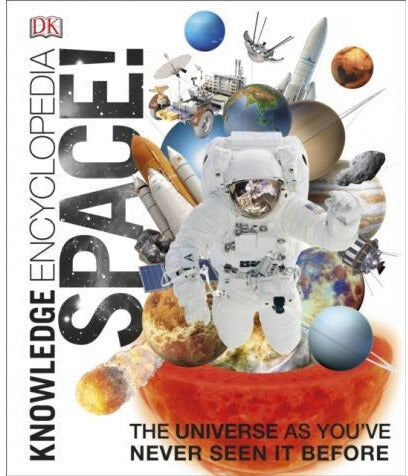
Dorling Kindersley DK Knowledge Encyclopedia Space The Ultimate Space & Astronomy Reference Guide for Kids and Families - Planets, Stars, Galaxies & the Universe ExplainExplore the wonders of the universe with the DK Knowledge Encyclopedia Space, an inspiring and visually stunning guide to outer space.Packed with high-definition photographs, 3D illustrations, infographics, facts, timelines, and scientific explanations, this encyclopedia takes readers on an unforgettable journey from Earth to the farthest reaches of the cosmos. Perfect for curious readers, young astronomers, and space enthusiasts, this book explains: The solar system, planets, moons, and dwarf planets Stars, nebulas, black holes, galaxies & cosmic phenomena Space exploration, astronauts & spacecraft The Big Bang, universe evolution & future missions The latest science discoveries explained in kid-friendly language A brilliant educational book for STEM learners, classrooms, home libraries, and children aged 8–14 who love space.9,99 £*Shipping: 2,99 £Secure redirect to the provider
-
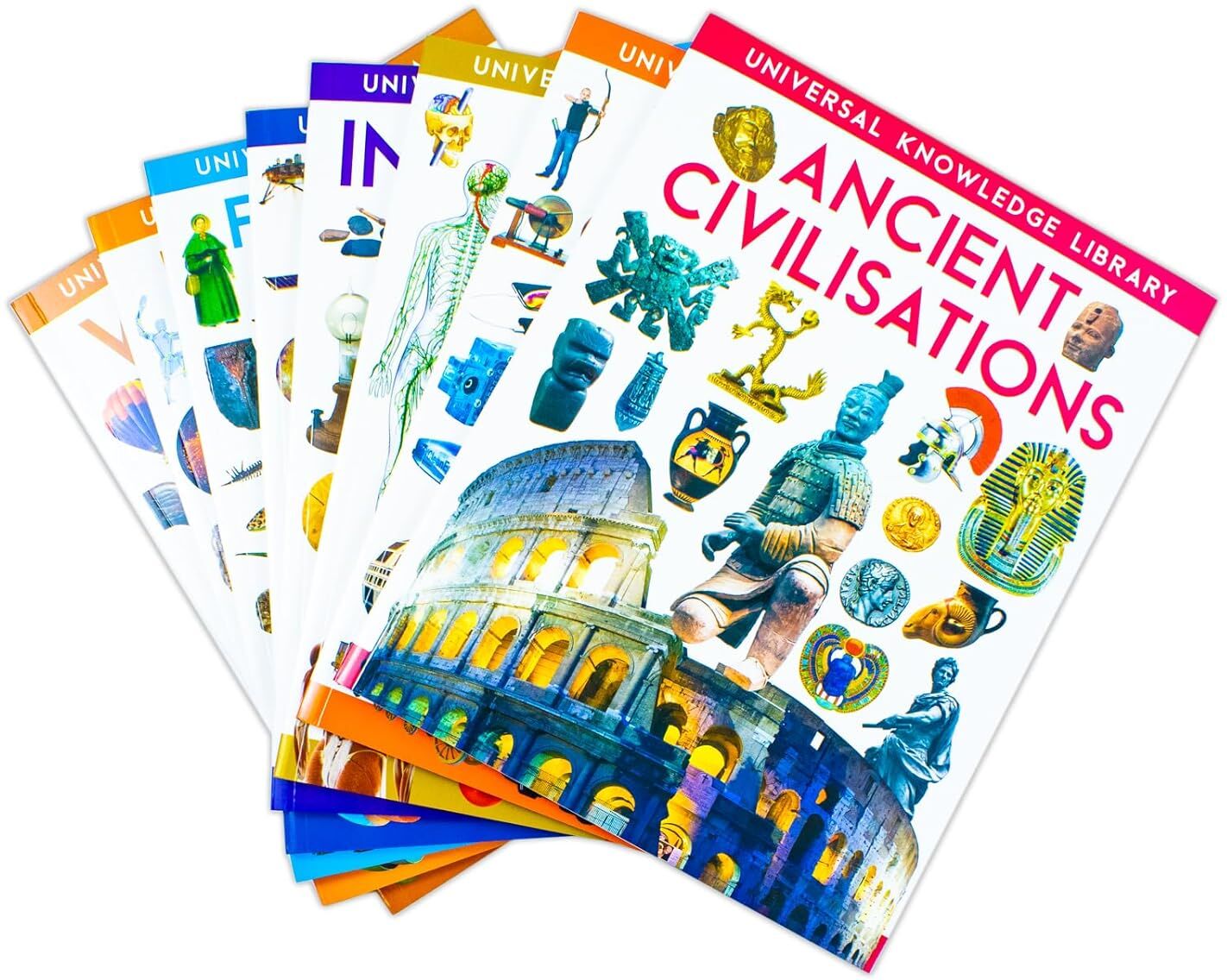
Fox Eye Publishing Universal Knowledge Library Science and History 8 Volume Book Collection Set – Ancient Civilisations, Human Body, Universe & Educational Learning BookUniversal Knowledge Library: Science and History - 8 Volumes Introduction: Welcome to the Universal Knowledge Library, a magical collection that opens the door to the wonders of science and history. These eight beautifully illustrated books will take you on exciting adventures, where you'll explore ancient civilizations, discover amazing inventions, and learn about the mysteries of the universe. Get ready to embark on a journey of discovery and wonder! Ancient Civilisations: Travel back in time to explore the incredible stories of ancient civilizations like Egypt, Greece, and Rome. Learn about their cultures, inventions, and the people who shaped history. Inventions: Uncover the amazing inventions that changed the world, from the wheel and the printing press to modern-day gadgets. Discover how these creations have made our lives easier and more exciting. Prehistoric Life: Step into the world of dinosaurs and other prehistoric creatures. Find out how these incredible animals lived millions of years ago and what scientists have learned from their fossils. Universe: Look up at the night sky and explore the vast universe. Learn about stars, galaxies, black holes, and the fascinating science behind the cosmos. Energy: Dive into the world of energy and discover how it powers everything around us. From the food we eat to the electricity that lights our homes, energy is all around us! Human Body: Take a fantastic journey inside the human body. Learn about how our organs work, how we grow, and the amazing ways our bodies keep us healthy. Planets: Visit the planets in our solar system and beyond. Discover the unique features of each planet and what makes Earth so special. Weather: Understand the science of weather and how it affects our daily lives. Learn about rain, snow, storms, and the fascinating patterns of our planet's climate. With the Universal Knowledge Library, each book is a new adventure waiting to be explored. Open the pages and let your curiosity lead the way!17,99 £*Shipping: 2,99 £Secure redirect to the provider
-
Arcturus Children's Encyclopedia of Space by Giles Sparrow Visual Guide to the Universe, Planets, Stars & Solar System Astronomy Reference Book for KidsJourney beyond Earth and discover the wonders of the cosmos with Children's Encyclopedia of Space: A Visual Guide to the Universe by Giles Sparrow. Part of the Arcturus Children's Reference Library, this engaging visual encyclopedia introduces young readers to the fascinating world of space, astronomy and the universe. Explore the Solar System, planets, moons, stars, galaxies and other extraordinary objects in space while developing an understanding of the vast universe beyond our planet. Presented as an accessible visual reference guide, the book makes complex astronomical topics engaging and easier for young readers to explore. Ideal for children fascinated by planets, stars, space exploration and astronomy, this encyclopedia encourages curiosity and provides a useful resource for independent reading, homework, school projects and general knowledge. Whether learning about our neighbouring planets or exploring the mysteries of distant stars and galaxies, Children's Encyclopedia of Space is a valuable addition to any young space enthusiast's bookshelf. Key Features Engaging children's space encyclopedia Written by astronomy author Giles Sparrow A visual guide to the universe and outer space Explores planets, stars, moons, galaxies and the Solar System Introduces astronomy in an accessible format for young readers Ideal for school projects, homework and independent learning Part of the Arcturus Children's Reference Library Excellent educational gift for young space and science enthusiasts5,99 £*Shipping: 2,99 £Secure redirect to the provider
-
Why do we research the universe?
We research the universe to gain a better understanding of our place in the cosmos and to satisfy our innate curiosity about the world around us. By studying the universe, we can learn about the origins of the universe, the formation of galaxies and stars, and the fundamental forces and particles that govern the universe. This knowledge can also lead to technological advancements and innovations that benefit society, such as improved communication and navigation systems, medical imaging technologies, and materials science. Additionally, studying the universe can inspire wonder and awe, and foster a sense of interconnectedness and humility among humanity. **
-
Is it possible to store every smallest piece of information in this universe within this universe?
It is not possible to store every smallest piece of information in this universe within this universe due to the limitations of space and resources. The universe is vast and constantly expanding, making it impossible to contain every single piece of information within it. Additionally, the sheer amount of information in the universe is beyond human comprehension and storage capabilities. **
-
Is it possible to store every smallest piece of information in our universe within this same universe?
It is not possible to store every smallest piece of information in our universe within the same universe. The universe is vast and constantly expanding, and there is a limit to the amount of information that can be contained within it. Additionally, storing every single piece of information would require an infinite amount of space and resources, which is not feasible within the constraints of our universe. **
-
Is it possible to store every smallest piece of information in our universe within the same universe?
It is not possible to store every smallest piece of information in our universe within the same universe. The universe is vast and constantly expanding, and the amount of information it contains is essentially infinite. Additionally, the storage capacity of the universe is limited by physical constraints such as the Planck length and the Planck time. Therefore, it is not feasible to store every single piece of information within the universe itself. **
Similar search terms for Universe
-
Numberblocks - Numberblock One's Face Kids T-Shirt Blocks UniverseDescription: Crafted for comfort and durability, this 100% cotton youth t-shirt features a seamless collar, twin-needle sleeves, and hem for a refined finish. Pre-shrunk and quarter-turned to minimise creasing, it ensures a lasting fit and easy care. Ideal for everyday wear. Materials: 100% US Cotton Specifications: Taped neck and shoulders for comfort and durability. Non-topstitched, classic width, rib collar. Seamless collar, twin-needle sleeves and hem for a refined finish. Care Instructions: Wash cool, 30°C Do not bleach Do not tumble dry Do not dry clean Don’t iron directly onto motif Fit: Classic fit for loose comfort10,99 £*Shipping: 2,99 £Secure redirect to the provider
-
Is the DC Universe stronger than the Marvel Universe?
The strength of the DC Universe compared to the Marvel Universe is subjective and depends on individual preferences. Both universes have their own unique strengths and weaknesses. DC is known for its iconic characters like Superman and Batman, while Marvel is known for its interconnected storytelling and relatable characters. Ultimately, the strength of each universe is in the eye of the beholder. **
-
What is the universe and what is another universe?
The universe is the entirety of space, time, matter, and energy, including all the galaxies, stars, planets, and other celestial bodies. It is everything that exists, from the smallest subatomic particles to the largest galaxies. Another universe refers to the possibility of there being other separate and distinct realms of existence beyond our own universe. This concept is often explored in theoretical physics and cosmology, but as of now, there is no empirical evidence to support the existence of other universes. **
-
What would a universe around our universe be called?
A universe around our universe would be called a "multiverse." The concept of a multiverse suggests that there are multiple separate universes, each with its own set of physical laws and properties. This idea is a topic of speculation in theoretical physics and cosmology, and it is not yet confirmed by empirical evidence. **
-
Universe or history?
Both the universe and history are fascinating subjects, but if I had to choose, I would pick the universe. The universe encompasses everything that exists, from the smallest particles to the largest galaxies, and studying it can lead to a deeper understanding of our place in the cosmos. History is also important for understanding the past and how it has shaped the present, but the mysteries of the universe and the potential for new discoveries make it a more compelling topic for me. **
* All prices are inclusive of VAT and, if applicable, plus shipping costs. The offer information is based on the details provided by the respective shop and is updated through automated processes. Real-time updates do not occur, so deviations can occur in individual cases. ** Note: Parts of this content were created by AI.